Facebook
 X
X
 Pinterest
 Copy Link
UPDATED FOR 2026 MARKET CONDITIONS
Can I Build It? A Step-by-Step Guide to Additional Dwelling Units (ADUs) in London
In London, Ontario, you are generally permitted to add up to two Additional Residential Units (ARUs)—one inside your main dwelling and one in a detached structure—provided you meet zoning setbacks (typically 1.2m), lot coverage limits (usually 40%), and building code safety standards. As of 2026, homeowners can now refinance up to 90% of their property value to fund these builds, and development charges are largely exempt under Bill 23.
[VIDEO SUMMARY: INSERT 60-SECOND PROTECTOR CLIP HERE]
For years, building a “Granny Suite” in London felt like fighting City Hall. You battled Development Charges, restrictive zoning, and impossible financing rules. Most people gave up before they dug the first hole.
But in 2026, the doors just swung wide open.
Between the provincial Bill 23 (which slashed the “red tape” taxes) and the new federal mortgage rules allowing 90% refinancing for secondary suites, building an Additional Dwelling Unit (ADU) is no longer just a “nice idea”—it is arguably the single best ROI renovation available to London homeowners.
Whether you are looking to generate $1,800+ in monthly rental income or house aging parents without nursing home fees, here is the “Protector’s Guide” to exactly how it works, what it costs, and the traps that can kill your project.
The Rules: Can You Actually Build One on Your Street?
Before you call a contractor, you need to check your “Dirt.” The City of London has become much friendlier toward density, but the laws of physics still apply.
Here are the three “Deal Killers” we check first:
- The Setback Surprise (1.2m): For a detached backyard suite, you typically need a minimum of 1.2 meters (approx. 4 feet) from the side and rear property lines. If you have a tight lot in Old South or a pie-shaped lot in a cul-de-sac, this setback can shrink your buildable area to zero.
- Lot Coverage (The 40% Cap): In most residential zones (R1, R2), all structures combined (your house + garage + shed + new ADU) cannot cover more than 40% of your total lot area. If you already have a massive footprint and a pool, you might be maxed out.
- Emergency Access: You need a clear path for firefighters (typically 1 meter wide) from the street to the backyard unit. No path? No permit.
PRO TIP
Don’t guess. Check the City of London’s interactive zoning map or call Building Services. A “Grandfathered” shed does not mean you can build a permanent home in the same spot.
Financing Your Build: The 3 “Secret” Funding Sources
This is the biggest change for 2026. Two years ago, you had to have the cash in the bank or a massive amount of equity. Today, the government wants you to build these units.
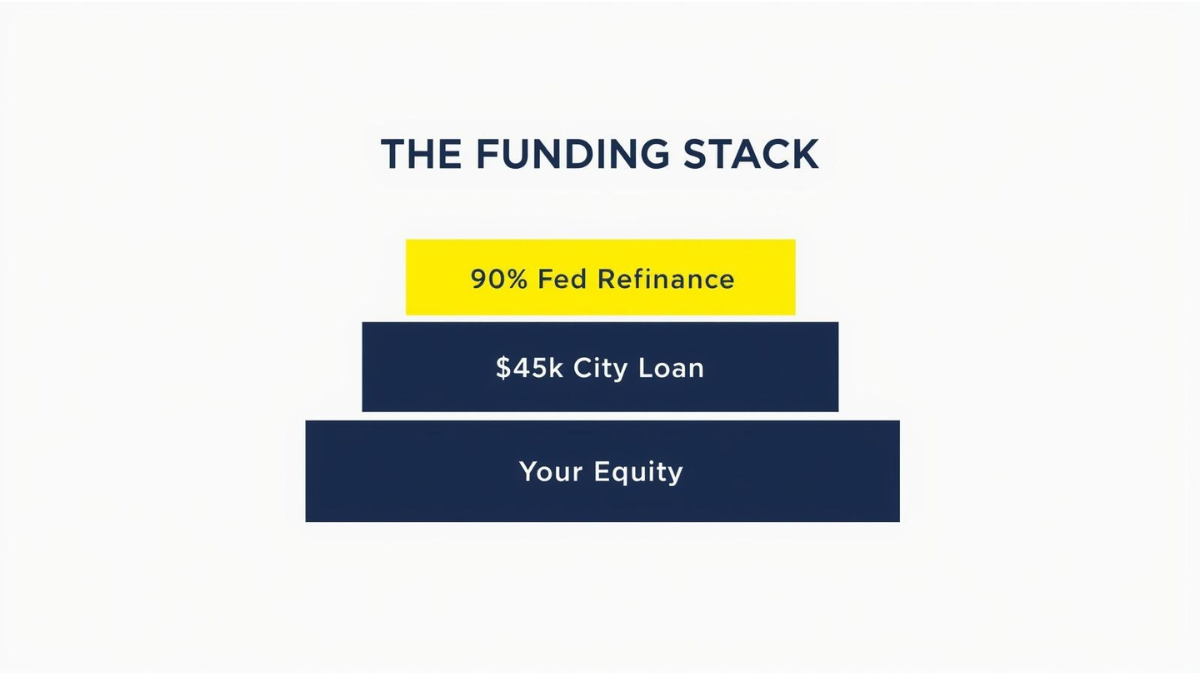
Here is the “Funding Stack” savvy investors are using right now:
1. The Federal “90% Rule” (The Game Changer)
Previously, you could only refinance your home up to 80% of its value. Now, under the new federal mortgage insurance rules, homeowners adding a secondary suite can refinance up to 90% of the property’s value.
- Why this matters: If your home is worth $800k, that extra 10% unlocks $80,000 of additional capital you couldn’t access before.
- Protector Note: Because this is an insured mortgage product, accessing the full 90% LTV typically triggers a CMHC insurance premium. You must factor this fee into your total cost—it’s not “free money,” it’s “accessible money.”
2. The City of London ARU Loan ($45k)
The City of London offers an interest-free loan of up to $45,000 for eligible homeowners creating additional units.
- The Catch: In exchange for the cheap money, you often have to commit to renting the unit at an “affordable” rate for a set period. You need to run the math: Does the interest savings outweigh the rental cap?
3. The “Rental Offset” Strategy
Lenders can now use up to 100% of the projected rental income from the new unit to help you qualify for the renovation loan. The suite essentially pays for its own mortgage approval.
Cost Breakdown: Prefab vs. Custom Build
“How much does it cost?” is the wrong question. The right question is: “What are the variables?”
A backyard suite is not a shed; it is a fully functioning house with plumbing, HVAC, and insulation. To give you a realistic idea, here are two real-world London examples from the last 12 months:
- The “Budget” Build ($215k): A 500 sq. ft. modular (prefab) unit installed in a Byron backyard. Lower cost because it was factory-built and craned in, minimizing labor delays.
- The “Complex” Build ($320k): A similar size custom stick-build in Old North. The cost spiked due to heritage permit delays, difficult backyard access (hand-digging trenches), and luxury finishes to match the main house.
| Drives Price DOWN 📉 | Drives Price UP 📈 |
|---|---|
| Prefab / Modular (Fixed contracts) | Custom Stick-Built (Labor/Weather risk) |
| Existing Services (Sewer/Water easy to reach) | New Trenching (Digging 100ft to the street) |
| Electric Heat/Mini-Split | Gas Service (Requires new line) |
| Standard Finishes (Vinyl/Laminate) | Luxury Finishes (Stone/Hardwood) |
(Note: These are estimates based on 2025/2026 London labor rates. Always get three quotes.)
Who Should NOT Build an ADU Right Now?
I am a Realtor, so I usually tell people to add value. But as your “Protector,” I have to tell you when to stop. Do NOT build if:
- You plan to move in < 3 years: You likely won’t recover the full $250k construction cost in resale value that quickly. This is a long-term hold or cash-flow play.
- You cherish total privacy: Tenants mean noise, shared driveways, and eyes in your backyard. If you hate neighbors, do not move one onto your lawn.
- Your lot is “Legally Wet”: If you are near the Thames River or a floodplain (conservation authority land), obtaining a permit can be impossible, regardless of zoning.
How to Find the Perfect “ADU-Ready” Property
Most listings on Realtor.ca don’t list “Zoning Depth,” “Sewer Grade,” or “Side Yard Clearance.” They just list “Big Backyard.” That is dangerous. You can buy a house with a huge yard, only to find out a municipal easement prevents you from digging.
If you are looking for a property specifically to generate income or house family, you need the right dirt.
This is where our VIP Home Hunter Service™ comes in.
We don’t just look for “Nice Kitchens.” We scan the market (including off-market homes) for:
- Wide Lots (for easy construction access).
- R2/R3 Zoning (Pre-approved density).
- Existing “Rough-Ins” (Saving you $10k in plumbing).
We find the asset that makes the math work, so you don’t have to fight the City Hall uphill battle.
Next Steps
You have two choices:
- Guess and Hope: Call a contractor and hope your zoning allows it.
- Plan and Profit: Get the facts first.
(A simple 5-minute “Yes/No” PDF tool)
Or, if you are ready to find a property with “Granny Suite Potential,” book a strategy call with us below. We’ll look at the numbers together.